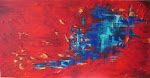
Road Rage by Nathalie Kyrou
Only the other day, I witnessed an incident in the parking lot of a Limassol superstore which left me stupefied. Two adult men, rolling around on the floor of the car park, throwing punches, and all this over who gets the parking space! I thought I may have been hallucinating, (this kind of nonsensical violence doesn’t really happen in Cyprus, does it?), until I heard that a friend of mine had witnessed another shameful display of aggression on the Limassol-Nicosia highway. Apparently, there was a car pulled over on the side of the highway, and one man was dragging another man out of the car, in an obvious and asinine attempt at bloodshed. As if that were not enough, my sister just told me that she recently saw a woman in the passenger’s seat of a car, slapping a man’s face (as if that weren’t bad enough), while he was driving! Absurd!
It seems that road rage in Cyprus is in full swing. You have to be very careful these days who you make eye contact with, let alone who you hoot your horn at, because you never know what kind of deranged person you’re dealing with. Now this wouldn’t be a problem if everyone knew how to drive (and park) on this island, but unfortunately, that is not the case. Nevertheless, take heed: practice a little temperance if you want to arrive alive.
It’s true that you need to have the patience of a snail with the eye span of an eagle to drive in this country. The minute you’re not concentrating, somebody is sure to cut you off, without signaling (has anyone in this country ever heard of indicating?) If you don’t happen to have eyes on the sides of your head, you may end up needing a new car.
And hello, does anyone get the concept of ‘fast’ and ‘slow’ lanes? Roads are designed with two lanes for a reason: it’s called overtaking…so please take your side already! I have had to weave my way down roads, sometimes putting my own safety at risk, all because people simply don’t understand that when they are in the right lane going way under the speed limit, the proper thing to do when a car is right behind them is to either pick up speed, or move to the left. I definitely don’t expect them to ignore me, after I have flashed my headlights at them. What’s worse is when you move to the left and overtake them from there, they follow you and stick to your behind, blinding you with their headlights in a malicious attempt to piss you off! (Seriously, it’s enough to get anyone mad, isn’t it?) If you’re guilty of having behaved with such hostility towards another driver, then maybe instead of renewing your membership to C.A.A next year, you should consider joining A.A.A (Automobile Aggression Association).
I’ve noticed the papers have been filled lately with letters complaining about the driving in Cyprus. People are aware of this problem, it seems, but rather than do something about it, they moan about it or laugh, but finally, accept the way things are. Sure the police are cracking down on illegal road acts more and more, but the truth is, although speeding tickets are being given out like there’s no tomorrow, so are driving licenses. And people just don’t follow the rules, no matter what the consequences. Cyprus has experienced some of the highest international rates of road accident fatalities for decades, and yet it still goes on. We need to put a brake on this now.
Nonetheless, this is not just another article about how careless and reckless drivers in Cyprus are…we already know this. The point I wish to make is that we should exercise the right balance of restraint on the road, by not indulging in displays of anger, violence and revenge, and by showing some courtesy to our fellow drivers. It’s not a matter of driving slower or faster; it all comes down to driving - and behaving - better. Be aware that there are others on the road as well as you, drive politely, and pay attention. Put down that mobile phone, stop eating, brushing your hair, smoking, trying to park on a double-yellow line or pavement, racing another driver through a red light, yelling at your passenger, checking out the person in the Mercedes in the lane next to you, or beating someone up, and for goodness sake… just drive!
Nathalie Kyrou © 2009. All rights reserved to the author.
AddThis

Tuesday, 18 November 2008

Monday, 27 October 2008
TRAVEL-Cuba
From one sea to another: A Cypriot visits Cuba by Nathalie Kyrou
The first thing I notice is the heat. Stepping off the plane, I feel like a cigar being placed in a humidor. Although I have just stepped across the world onto Cuban soil, the airport, signs, chaos at passport control, as well as the locals welcoming us tourists, are all strangely reminiscent of my own country - also an island - Cyprus.
From one island and sea (and literally ‘C’) to another, I notice the similarities between Cyprus and Cuba end once you exit the airport. Back home there may be old Mercedes taxis still functioning, but here a variety of antique cars dating all the way back to the 1950s are parked on roadsides, their vibrant colours reflecting the brilliant sun. Around us, the plentiful vegetation is also a little more dense and abundant than I had expected. Coconut palm trees - very different in appearance to the other species one is used to seeing back home - fill the landscape. This island, like my own native land, is at first impression very hot, but unlike the yellow dryness of the Cypriot summer, Cuba is extremely green, reminding me that I am indeed in the tropics.
If you are heading off to the most popular beach resort in the country, you will most probably be making your way to Varadero, and to do this you must enter the province of Havana. The drive along the peninsula to my hotel is remarkable: traditional Cuban homes, crumbling in poverty, are postcard material; screaming with character, they border the roads, adorned with colourful washed clothes hanging on the line, blowing in the breeze. There is a sweet rich smell lingering in the air, but I cannot pin down what it is exactly. Cubans, sitting along the dusty roadside or crouched on dilapidated rooftops, seemed undisturbed by the sound of our tour bus whizzing past – they are obviously used to this tourist invasion. Exotic plants line the thick red soil of the surrounding farmlands, and everywhere I turn there is water. Not only is the peninsula of Varadero merely 700 metres wide, as well as being surrounded by water on both sides it is also filled with water in its centre, in a form comparable to a large dam.
It may sound cliché, but I cannot wait to see the beach, which is after all the reason I booked this vacation in the first place! Having grown up in the sea-side town of Lemesos, be it across the world, I have the salty taste of the sea in my veins. But to my disappointment, after waiting my entire life to see the Caribbean Sea up close, this aquamarine water framed by fine white sand is not as calm as advertising photographs have promised it to be. In my dreams of this place, the waves are not as fierce, nor is the wind. Being used to the tranquillity of the Mediterranean waters my entire life, I am not accustomed to the ferocity of this vast surf before me, so I feel both excited and a little fearful as I step into this tropical sea for the first time. In fact, I only actually experience one morning of crystal clear, still water during my entire week-long stay in Cuba. It is true that no matter what time of year you decide to visit, it really is down to luck whether you will be wrestling for your life as you dodge the violent waves or enjoying yourself as you float calmly whilst snorkelling on the reef.
The next morning promises tamer weather. The smell of sweet coconut and banana oils wafts through the air. Seeking the soothing shade as well as protection from the sharp breeze, I settle under the cover of my straw thatched parasol. In my section of the beach, the sun beds are set back at least fifty metres from the shore. Nestled near the plants and trees, they leave a large stretch of pristine, powdery white, untouched sand between the people and the ocean. As much as I love my own country, Ayia Napa this is not. There is no-one to bother you out here, no messy, dirty sun-beds, no children screaming. For most of the relaxed bodies, either asleep, or sipping on cocktails, the relentless wind and scorching sand make reaching the water too tiresome a challenge, even to those who are attracted by the idea of exploring the warm sea. As a result, the scenery remains fairly empty and thus, picture perfect. As I settle down onto my űber-comfortable sun-bed, I am intoxicated by the peaceful mood around me, only slightly distracted by the occasional Latino vibes filtering through the atmosphere from a salsa class being held somewhere in the distance.
A day out in the sun will definitely stir up the appetite, and if you are staying in a beach resort complex comprised of more than one hotel, it is typical that you’ll have access to all of its hotel restaurants for meals, leaving you with an impressive choice of places to dine. The strangest meal I devour on this trip is at the seaside wooden hut tavern: a dish of rice topped with a fried egg, framed by a cooked sweet plantain banana, served with fresh tomato sauce and a side order of black beans (a very odd combination indeed, but a local delicacy nevertheless). Once I have scrambled it altogether - as instructed by my waiter - I admit it is, to my surprise, delicious. And as if that is not enough, I have fresh Cuban fish to follow, and for dessert, decadent homemade coconut ice-cream. No matter how good the food is, however, based on my experience as a traveller it may prove a good idea to cut meat out of your diet during such a voyage for a variety of reasons, the benefit being that because of this you will be forced to try vegetarian options such as fish and seafood instead (even though most Cuban dishes contain pork or chicken – unlike beef which is rare here and thus too expensive). The fresh grilled snapper, calamari and shrimp are succulent and delectable, and with no doubt the best choice anyway, and the paella, served fresh off the grill by the poolside, is truly the best I have ever tasted. It also is worth your while to consume as much tropical fruit as possible while out here, because not only is it local, abundant and fresh, it does not cost you a thing (unlike drinks – including bottled water – which you may be charged for even if you are on an inclusive package).
On my second evening, I venture out of the resort with some hotel guests, (did I mention that everybody out here is either German, Russian, French or Canadian), accompanied by one of the hotel entertainers. We go to a Cuban 1950s style club which features a live Latin band called Mambo. The moment we walk into the night spot we are faced with a humorous sight: at least fifty people on the dance floor doing a form of synchronised dancing which reminds me of the Macarena or perhaps a Cuban version of line dancing. I realise I need a drink! A ten dollars entrance fee to the club gives me access to an open bar all night, allowing me to sample a variety of local beverages. I try two rum cocktails: Rum Punch and the famous Mohito (made with real sugar cane) which is refreshing and highly addictive. Turning back to the dance floor, I am now ready to join the others and lose myself in the vibe (and gosh, can these Cubans dance!) My favourite music is by the famous Cuban band ‘Las Orishas’ – a mixture of French and Spanish rap over Latino style melodies. Club Rhumba is another option if you are looking for a busier spot with a somewhat more international scene. The nightlife here is the same as on any party island: young people having fun into the early hours of the morning.
Not surprisingly, I find it very hard waking up at the crack of dawn for my excursion to Cuba’s capital, Havana. With swollen ankles and a sore sunburn (I should have remembered that the closer you get to the equator, the stronger the sun is), I board the bus and sleep for the most of the two hour drive out to the capital, unfortunately missing out on all the scenery along the way. I awaken to crumbling eighteenth century buildings in faded colours, to a cultural and historic city which is overpopulated and drenched in an extremely pungent smell, and also to poverty. We drive around Havana, trying to pay attention to our uninformative and sadly rather boring tour guide, stopping to have lunch in a restaurant set in an old pink house. We then visit the downtown area, the oldest part of the capital, which is definitely also the poorest. It had been said that smell may be the strongest trigger of memory, but unlike the warm, salty, humid air of Cyprus, or the crisp, cold, damp smell of London, the stench in downtown Havana is not one you would care to remember. The stray dogs, overstuffed horse-driven carts and buses only add to the sickening and unbearable stink of human and animal pollution. Intolerable and suffocating, it is spread around by the warm breeze, leaking into even the smallest cracks and corners.
On a brighter note, upon our tour of this city, which is rich in culture and immersed in history, we come across numerous noteworthy sites: a park named after and dedicated to John Lennon by all his fans (I had not realised what an impact he had made on Cubans before this), the hotel where Earnest Hemmingway lived for four years while he wrote “For whom the Bell Tolls” (in fact he lived in Cuba for 18 whole years), and a beautiful old Spanish church (having been mesmerized by its beauty, I cannot for some reason remember why it is famous). More interesting yet is the fact that Christopher Columbus first embarked here, on this very island, when he crossed the Atlantic Ocean on his famous voyage.
The market place of downtown Havana is also worthy of a visit, brimming with life and immensely colourful, but it is fair to say that practically every stall sells mostly the same items. People will always haggle with prices too, even offering to barter their goods with the contents of one’s handbag: candy, jewellery, used cosmetics. (Several people even walk up to me in the streets and beg me for ‘savon’, which I only later realise means that those poor citizens were in need of soap! In the museum we visit, the women staff plead with us to give them candy or medication for their children. I wish I was more prepared and had brought along supplies with me). Nonetheless, despite all the desperation, only a few elderly people sitting on the steps of the church actually beg for money. In fact, Havana is not the poorest city I have ever been to, but it still lacks certain things which we in the developed world take for granted, making it deprived in its own way. I also think this is the first place I have ever been to where nowhere is to be found any Coca-Cola sign. Most of us may have become accustomed to the fact that American products are omnipresent throughout the world, but in Cuba, where the opposite is the case, you really notices their absence.
We finally visit the Romeo and Juliet cigar factory - whether you are a cigar aficionado or not, this is certainly not to be missed - picking up a box of cigars to take home on our way out. Although glad to have experienced Havana, I am more than ready to return to my hotel. Once again within the confines of this heavenly prison, I discover the best way to get a feel for the authentic Cuban vibe is to smoke one of those cigars, or preferably one rolled freshly by the lady at the cigar stall in your hotel lobby. There, as you sit in the breeze of the hotel terrace, cigar in mouth, you can truly relax while you mentally prepare yourself for the morning antics. I say this because mornings are war time in the hotel, as one gets up earlier than can be considered desirable, simply in order to secure sun-beds. After a few unsuccessful tries, on my the fourth day, I awaken extra early, before the attendants are even up and about, and actually manage to acquire a suitable lounging spot on the beach, but much to my dismay, not only does it rain all morning, but it remains cloudy and windy all day long! Cold but stubborn as a mule, I stay on the beach, listening to music and trying to read, while all around me the beds are for once empty, as more people more sensible than myself seek more appropriate pastimes for such weather.
Finally, a sandstorm on the beach diverts me to the swimming pool and recreation area. It is only after I walk around the grounds a little, that I discover the secret swimming pool by the hotel bungalows. There I find a true oasis, with cosy corners surrounded by palms swaying in the breeze, framed by wooden bridges. The pool’s inviting and calm turquoise waters lure me in, and I finally get the swim I deserve. Afterwards, I decide to continue my stroll through the fascinating tropical grounds and gardens of the hotel. Lush in greenery and elaborate in design, the hotel grounds are spectacular, the only disappointing fact being that they are not well lit at night; the high arches and numerous plants in the fancy gardens lay asleep in the enveloping darkness which forbids the wandering guest from exploring. The gardens, in general though, far outshine the hotel rooms, which are bathed in intense pink paint, and lined with marble floors which augment and echo any kind of noise (my advice is if you are looking for peace and quiet, sleep on the beach). On the other hand, all this is made up for by the wonderful sounds that also surround me, sounds that remind me of my childhood: the soft rustling of the palm leaves against each other, the wind howling, whistling then whispering, the lapping then smashing of waves on the beach, a loud cricket’s song and a bird’s soothing lullaby (all of which of course I notice only when the rest of the noise has died down).
On my last day in Cuba, I am thrilled that the morning greets me with promising clear skies, as the rest of my holiday has been plagued with the kind of cool weather known as the ‘coldfront’ which, I have been told, the tide has brought in. Luckily today unfolds into a warm and bright afternoon, although the ocean continues to attack the shore and my attempts to swim are futile. Needless to say I get crushed by a wave and my shoulder ends up scraped on the sand, leaving me aching and bruised, but strangely victorious and happy at my brave attempt.
As I board the plane to leave windy Cuba, with its beauty and culture, behind me, what I take with me are not souvenirs that one can physically hold (well, apart from the cigars - you have to take home Cuban smokes!) My greatest souvenirs are my memories of unforgettable and striking natural images, like the large albatross type birds swooping over water, dunking into it beak first, then floating on the surface like large ducks; the quiet strolls through the peaceful grounds of my hotel; that shade of aquamarine water that is unsurpassed in richness and beauty; or the feel of the soft powdery sand between my toes. But most of all I remember the trees: numerous varieties of cactuses growing everywhere, the sweet smell of huge carobs and mangroves which emerge out of nowhere framing the shore. Last, but certainly not least, those palm trees, with their short, thin, fat, or lumpy barks; like plastic models dotting the beach, coconuts dangling perilously overhead, they sway gently in the wind, silhouetted against the sun as it sets on the horizon. In the distance the sea is endless and wild.
Nathalie Kyrou © 2008. All rights reserved to the author.
The first thing I notice is the heat. Stepping off the plane, I feel like a cigar being placed in a humidor. Although I have just stepped across the world onto Cuban soil, the airport, signs, chaos at passport control, as well as the locals welcoming us tourists, are all strangely reminiscent of my own country - also an island - Cyprus.
From one island and sea (and literally ‘C’) to another, I notice the similarities between Cyprus and Cuba end once you exit the airport. Back home there may be old Mercedes taxis still functioning, but here a variety of antique cars dating all the way back to the 1950s are parked on roadsides, their vibrant colours reflecting the brilliant sun. Around us, the plentiful vegetation is also a little more dense and abundant than I had expected. Coconut palm trees - very different in appearance to the other species one is used to seeing back home - fill the landscape. This island, like my own native land, is at first impression very hot, but unlike the yellow dryness of the Cypriot summer, Cuba is extremely green, reminding me that I am indeed in the tropics.
If you are heading off to the most popular beach resort in the country, you will most probably be making your way to Varadero, and to do this you must enter the province of Havana. The drive along the peninsula to my hotel is remarkable: traditional Cuban homes, crumbling in poverty, are postcard material; screaming with character, they border the roads, adorned with colourful washed clothes hanging on the line, blowing in the breeze. There is a sweet rich smell lingering in the air, but I cannot pin down what it is exactly. Cubans, sitting along the dusty roadside or crouched on dilapidated rooftops, seemed undisturbed by the sound of our tour bus whizzing past – they are obviously used to this tourist invasion. Exotic plants line the thick red soil of the surrounding farmlands, and everywhere I turn there is water. Not only is the peninsula of Varadero merely 700 metres wide, as well as being surrounded by water on both sides it is also filled with water in its centre, in a form comparable to a large dam.
It may sound cliché, but I cannot wait to see the beach, which is after all the reason I booked this vacation in the first place! Having grown up in the sea-side town of Lemesos, be it across the world, I have the salty taste of the sea in my veins. But to my disappointment, after waiting my entire life to see the Caribbean Sea up close, this aquamarine water framed by fine white sand is not as calm as advertising photographs have promised it to be. In my dreams of this place, the waves are not as fierce, nor is the wind. Being used to the tranquillity of the Mediterranean waters my entire life, I am not accustomed to the ferocity of this vast surf before me, so I feel both excited and a little fearful as I step into this tropical sea for the first time. In fact, I only actually experience one morning of crystal clear, still water during my entire week-long stay in Cuba. It is true that no matter what time of year you decide to visit, it really is down to luck whether you will be wrestling for your life as you dodge the violent waves or enjoying yourself as you float calmly whilst snorkelling on the reef.
The next morning promises tamer weather. The smell of sweet coconut and banana oils wafts through the air. Seeking the soothing shade as well as protection from the sharp breeze, I settle under the cover of my straw thatched parasol. In my section of the beach, the sun beds are set back at least fifty metres from the shore. Nestled near the plants and trees, they leave a large stretch of pristine, powdery white, untouched sand between the people and the ocean. As much as I love my own country, Ayia Napa this is not. There is no-one to bother you out here, no messy, dirty sun-beds, no children screaming. For most of the relaxed bodies, either asleep, or sipping on cocktails, the relentless wind and scorching sand make reaching the water too tiresome a challenge, even to those who are attracted by the idea of exploring the warm sea. As a result, the scenery remains fairly empty and thus, picture perfect. As I settle down onto my űber-comfortable sun-bed, I am intoxicated by the peaceful mood around me, only slightly distracted by the occasional Latino vibes filtering through the atmosphere from a salsa class being held somewhere in the distance.
A day out in the sun will definitely stir up the appetite, and if you are staying in a beach resort complex comprised of more than one hotel, it is typical that you’ll have access to all of its hotel restaurants for meals, leaving you with an impressive choice of places to dine. The strangest meal I devour on this trip is at the seaside wooden hut tavern: a dish of rice topped with a fried egg, framed by a cooked sweet plantain banana, served with fresh tomato sauce and a side order of black beans (a very odd combination indeed, but a local delicacy nevertheless). Once I have scrambled it altogether - as instructed by my waiter - I admit it is, to my surprise, delicious. And as if that is not enough, I have fresh Cuban fish to follow, and for dessert, decadent homemade coconut ice-cream. No matter how good the food is, however, based on my experience as a traveller it may prove a good idea to cut meat out of your diet during such a voyage for a variety of reasons, the benefit being that because of this you will be forced to try vegetarian options such as fish and seafood instead (even though most Cuban dishes contain pork or chicken – unlike beef which is rare here and thus too expensive). The fresh grilled snapper, calamari and shrimp are succulent and delectable, and with no doubt the best choice anyway, and the paella, served fresh off the grill by the poolside, is truly the best I have ever tasted. It also is worth your while to consume as much tropical fruit as possible while out here, because not only is it local, abundant and fresh, it does not cost you a thing (unlike drinks – including bottled water – which you may be charged for even if you are on an inclusive package).
On my second evening, I venture out of the resort with some hotel guests, (did I mention that everybody out here is either German, Russian, French or Canadian), accompanied by one of the hotel entertainers. We go to a Cuban 1950s style club which features a live Latin band called Mambo. The moment we walk into the night spot we are faced with a humorous sight: at least fifty people on the dance floor doing a form of synchronised dancing which reminds me of the Macarena or perhaps a Cuban version of line dancing. I realise I need a drink! A ten dollars entrance fee to the club gives me access to an open bar all night, allowing me to sample a variety of local beverages. I try two rum cocktails: Rum Punch and the famous Mohito (made with real sugar cane) which is refreshing and highly addictive. Turning back to the dance floor, I am now ready to join the others and lose myself in the vibe (and gosh, can these Cubans dance!) My favourite music is by the famous Cuban band ‘Las Orishas’ – a mixture of French and Spanish rap over Latino style melodies. Club Rhumba is another option if you are looking for a busier spot with a somewhat more international scene. The nightlife here is the same as on any party island: young people having fun into the early hours of the morning.
Not surprisingly, I find it very hard waking up at the crack of dawn for my excursion to Cuba’s capital, Havana. With swollen ankles and a sore sunburn (I should have remembered that the closer you get to the equator, the stronger the sun is), I board the bus and sleep for the most of the two hour drive out to the capital, unfortunately missing out on all the scenery along the way. I awaken to crumbling eighteenth century buildings in faded colours, to a cultural and historic city which is overpopulated and drenched in an extremely pungent smell, and also to poverty. We drive around Havana, trying to pay attention to our uninformative and sadly rather boring tour guide, stopping to have lunch in a restaurant set in an old pink house. We then visit the downtown area, the oldest part of the capital, which is definitely also the poorest. It had been said that smell may be the strongest trigger of memory, but unlike the warm, salty, humid air of Cyprus, or the crisp, cold, damp smell of London, the stench in downtown Havana is not one you would care to remember. The stray dogs, overstuffed horse-driven carts and buses only add to the sickening and unbearable stink of human and animal pollution. Intolerable and suffocating, it is spread around by the warm breeze, leaking into even the smallest cracks and corners.
On a brighter note, upon our tour of this city, which is rich in culture and immersed in history, we come across numerous noteworthy sites: a park named after and dedicated to John Lennon by all his fans (I had not realised what an impact he had made on Cubans before this), the hotel where Earnest Hemmingway lived for four years while he wrote “For whom the Bell Tolls” (in fact he lived in Cuba for 18 whole years), and a beautiful old Spanish church (having been mesmerized by its beauty, I cannot for some reason remember why it is famous). More interesting yet is the fact that Christopher Columbus first embarked here, on this very island, when he crossed the Atlantic Ocean on his famous voyage.
The market place of downtown Havana is also worthy of a visit, brimming with life and immensely colourful, but it is fair to say that practically every stall sells mostly the same items. People will always haggle with prices too, even offering to barter their goods with the contents of one’s handbag: candy, jewellery, used cosmetics. (Several people even walk up to me in the streets and beg me for ‘savon’, which I only later realise means that those poor citizens were in need of soap! In the museum we visit, the women staff plead with us to give them candy or medication for their children. I wish I was more prepared and had brought along supplies with me). Nonetheless, despite all the desperation, only a few elderly people sitting on the steps of the church actually beg for money. In fact, Havana is not the poorest city I have ever been to, but it still lacks certain things which we in the developed world take for granted, making it deprived in its own way. I also think this is the first place I have ever been to where nowhere is to be found any Coca-Cola sign. Most of us may have become accustomed to the fact that American products are omnipresent throughout the world, but in Cuba, where the opposite is the case, you really notices their absence.
We finally visit the Romeo and Juliet cigar factory - whether you are a cigar aficionado or not, this is certainly not to be missed - picking up a box of cigars to take home on our way out. Although glad to have experienced Havana, I am more than ready to return to my hotel. Once again within the confines of this heavenly prison, I discover the best way to get a feel for the authentic Cuban vibe is to smoke one of those cigars, or preferably one rolled freshly by the lady at the cigar stall in your hotel lobby. There, as you sit in the breeze of the hotel terrace, cigar in mouth, you can truly relax while you mentally prepare yourself for the morning antics. I say this because mornings are war time in the hotel, as one gets up earlier than can be considered desirable, simply in order to secure sun-beds. After a few unsuccessful tries, on my the fourth day, I awaken extra early, before the attendants are even up and about, and actually manage to acquire a suitable lounging spot on the beach, but much to my dismay, not only does it rain all morning, but it remains cloudy and windy all day long! Cold but stubborn as a mule, I stay on the beach, listening to music and trying to read, while all around me the beds are for once empty, as more people more sensible than myself seek more appropriate pastimes for such weather.
Finally, a sandstorm on the beach diverts me to the swimming pool and recreation area. It is only after I walk around the grounds a little, that I discover the secret swimming pool by the hotel bungalows. There I find a true oasis, with cosy corners surrounded by palms swaying in the breeze, framed by wooden bridges. The pool’s inviting and calm turquoise waters lure me in, and I finally get the swim I deserve. Afterwards, I decide to continue my stroll through the fascinating tropical grounds and gardens of the hotel. Lush in greenery and elaborate in design, the hotel grounds are spectacular, the only disappointing fact being that they are not well lit at night; the high arches and numerous plants in the fancy gardens lay asleep in the enveloping darkness which forbids the wandering guest from exploring. The gardens, in general though, far outshine the hotel rooms, which are bathed in intense pink paint, and lined with marble floors which augment and echo any kind of noise (my advice is if you are looking for peace and quiet, sleep on the beach). On the other hand, all this is made up for by the wonderful sounds that also surround me, sounds that remind me of my childhood: the soft rustling of the palm leaves against each other, the wind howling, whistling then whispering, the lapping then smashing of waves on the beach, a loud cricket’s song and a bird’s soothing lullaby (all of which of course I notice only when the rest of the noise has died down).
On my last day in Cuba, I am thrilled that the morning greets me with promising clear skies, as the rest of my holiday has been plagued with the kind of cool weather known as the ‘coldfront’ which, I have been told, the tide has brought in. Luckily today unfolds into a warm and bright afternoon, although the ocean continues to attack the shore and my attempts to swim are futile. Needless to say I get crushed by a wave and my shoulder ends up scraped on the sand, leaving me aching and bruised, but strangely victorious and happy at my brave attempt.
As I board the plane to leave windy Cuba, with its beauty and culture, behind me, what I take with me are not souvenirs that one can physically hold (well, apart from the cigars - you have to take home Cuban smokes!) My greatest souvenirs are my memories of unforgettable and striking natural images, like the large albatross type birds swooping over water, dunking into it beak first, then floating on the surface like large ducks; the quiet strolls through the peaceful grounds of my hotel; that shade of aquamarine water that is unsurpassed in richness and beauty; or the feel of the soft powdery sand between my toes. But most of all I remember the trees: numerous varieties of cactuses growing everywhere, the sweet smell of huge carobs and mangroves which emerge out of nowhere framing the shore. Last, but certainly not least, those palm trees, with their short, thin, fat, or lumpy barks; like plastic models dotting the beach, coconuts dangling perilously overhead, they sway gently in the wind, silhouetted against the sun as it sets on the horizon. In the distance the sea is endless and wild.
Nathalie Kyrou © 2008. All rights reserved to the author.
Sunday, 26 October 2008
MUSIC - Listen and Harmonize...Review and Interview
Listen and Harmonize by Nathalie Kyrou
Plato said “Philosophy is the highest music”, Beethoven said “Music is a higher revelation that all wisdom and philosophy”. Could music be the highest philosophy? Experiencing the Cyprus’ International Music Festival and an interview with one of the artists opens the doors to musical enlightenment.
In the magnificent setting of the ancient Kourion theatre, the annual International Music Festival celebrated its first year of “beauty through music and landscape” this summer. Founders and organizers, Teresa Dello Monaco and Paolo Cremona, did a tremendous job of selecting world renown musicians, and combining various musical styles (the festival is open to classical, jazz, traditional and avant-garde music) with a setting that evokes deep-felt emotion. Comprising of three evening concert performances, the festival, this year, hosted Daniel Levy who offered us a fresh, new perspective of classical works; the Jacques Loussier Trio who enthralled us with never-heard before alchemies of jazz and classical melodies; and the gypsy jazz energy of the fun and young Zaiti ensemble.
Fade in. An open-air amphitheatre, perched on a cliff-top amongst ancient ruins, set against a backdrop of the Mediterranean Sea. The night sky is dark and sprinkled with glittering stars. In the distance lies a faint outline of the horizon. The wind whispers through the air while waves can be heard crashing upon the shore below. A crowd gathers on the stone seats of this intimate venue. There is a buzz of excitement in the air. Daniel Levy is about to perform on the black polished Steinway lying alone in the middle of the stage.
Levy caresses the keys softly before his slow commencement of Brahms. The music softly creeps up on you, without the need for amplifiers, as his fingers scurry over the ivory bars. When he pauses, the vast silence of the venue engulfs you. Levy’s expression matches the music’s vivid character. He makes what is difficult to perform, look easy, delivering piece after piece with clarity and concentrated melody. He teases us gently with his pianissimo, amazing us with his accuracy. Every single note is played with extreme care and attention to detail.
Mesmerizing us with his Chopin performance, Levy captivates his listeners with his skillful rendition of the Barcarolle. The second half of the recital contains more recognizable music from Chopin and Schumann - works with a more romantic feel to them – a perfect complement to the enchanting surroundings. During Liszt, Levy’s left digits rumble over the keys like rolling thunder, his right fingertips like raindrops tinkling on glass. Keeping us on our toes with changes of tempo, he delivers a memorable ending to the piece, then entrances us with his encore, an improvisation surprisingly played solely with his left hand. The finale is a dramatic display of musical flair as Levy ends the performance like a storyteller finishing a tale with gusto.
Not only a master of music on stage, but also a kind, intelligent and interesting man, the renown Daniel Levy inspired me during our interview:
You have said that “Music is a language”. Can you elaborate?
Not only is music a language, but language itself comes from music. In India, grammarians are musicians - they understand grammar from their love of music. The origins of words are often derived from music. Take the word "accordo" in Italian, rooted in music and adapted into everyday language. Same with the word "sympathy" –often the tone of one's voice is described as being sympathetic. How about “strings”? Have you ever heard of the expression: "pulling/tugging at one’s heart-strings" to denote emotion? This epitomizes the link between music, language and feelings. Even the word “heart” is very close to the word “heard”. When you say you learn things "by heart", you mean that you hear it, and then remember it... once again to do with sounds and listening.
Music is literature without words. The ballad represents a poem, the ‘novellette’ is a short novel in small parts. The composer doesn't tell you what the story is (in words), but you can hear the 'voices' in the music. Actually, the great composers were inspired by novels. Liszt's ‘Vallée d’Obermann’ is a great example of this – the music was inspired by a book of the same title, which tells the story of a man (Obermann) who went to Switzerland to a valley (not an actual place but more of a philosophical state) to find himself.
You chose to record Schumann’s works and perform him at the festival this year? What do you find so unique and inspiring about his music?
Schumann was a sympathetic man, which is why so many listeners were affected by his music. There was a sense of singing and poetry in his works, and he was inspired by children and nostalgia, all of which give his music a sense of freedom, intuition, and purity, which attracts me. His compositions may not appear to be difficult to play but they are in fact more complicated than other "acrobatics" on stage, which seem to have more music packed into a piece. With Schumann there is so much yet to discover. In 2010 it will be his 200th anniversary - celebrated by musicians all across the world. My aim is to bring some of his less popular works to light. There is no motivation to do this amongst managers of music - it is always the same pieces which are performed and recorded, and yet he has so many other compositions. Using a celebration as a reason to discover more of his work is a great way to get to know him better.
How about Chopin?
The thing about Chopin is that the pieces that are usually performed are usually “spectacular” and seem difficult to play. The Barcarolle is a little different as it seems easier and yet it’s not. I believe it’s harder to play a very good pianissimo than a forte. Also velocity is not the most important indication of difficulty either. Something andante and without noise is more challenging to impress people with. It's like being naked on a stage.
How do you see live performances evolving in the modern world?
The 'concert' as we know it is quite recent. Piano recitals were the continuity of poetry, begun by Liszt. In fact in the 19th century, it was not uncommon to have 4 hour long performances with singers, sonatas and orchestras - it was not until the end of that century when the focus was shifted to one artist for each recital. These days, music has become a pause, an interval. It is hard to capture all that the composer was trying to say in just a couple of hours. Although I do believe that is it not only about how long the piece is, but how intense it is for both the audience and the performers, we cannot deeply appreciate what is happening, when we don't have enough time.
I believe in the influence of music on human beings: in taking time out, in making a choice to listen. Music is a mirror of time - it is impossible to shorten the time it takes to listen to a sonata - it takes as long as it takes. You just cannot squish the story. What’s also important is that music must sound, even if it is an old composition, as though it were something that is happening - and relevant - now. Each time you hear it, it could be interpreted differently.
How does recording in studio compare with live concerts?
Sometimes a truly well executed recording of a piece can give you a different yet equally satisfying experience of the music compared to a live performance. There is something to be said about listening alone versus listening with people. With live concerts, sometimes because of technicalities or conditions not being right, they may not turn out as perfect as is desired. I love playing with an orchestra, as well as doing solos, but actually working with the ensemble rather than just showing up on the concert night and playing without rehearsing with them beforehand. When it comes to the audience, I can tell during the performance if they are "willing to listen". There is a different between hearing and listening.
Is this part of what you have written about in your novels, as well as what you are trying to teach in your newly founded Academy of Euphony?
Yes. We think that we listen very well, simply because we have ears, but that's not true. We learn to talk, write, and read at school, but how about just listening? The great composers all had so many things in common: they were all deep listeners, completely aware of the music, of its role, and what it can evoke in you. When you first study the composers it seems that they were simply romantic and poetic, when in fact they were simply aware that one can transcend themselves with music.
You cannot discover such things in a regular academy, which is why I have founded the Academy of Euphony, a place to share, accessible to all. We are all musical instruments in an orchestra - each of us with a different pitch. We can all offer something to one another, no matter what our background is - as long as we feel the necessity. It would be a borderless form of teaching, with no divisions, where each person can take or give as they wish, educating themselves in the process. The challenge is to: i) Experience sound, ii) Listen, and iii) Go beyond. The idea is to explore harmony, as the body itself is a harmonic human unity… a true musical chord.
Pythagoras originated the idea of the enlightening and healing power of sounds and music thousands of years ago, however you seem to be the pioneer in bringing the idea of Euphony as a state of consciousness to the attention of modern society. Why now, and how will you succeed when so many others have failed?
So many people in time have tried to do this, but silently, without listening. Music was not essential before... but it is the right moment now. It seems that there is greatest necessity to address this issue now that there is so much ‘noise’ in the world. Recognizing that this sort of education could be essential to each one of us is a natural reaction to this. The Dalai Lama said: “In a moment of so much communication, and yet no communication...there are so many windows, but nothing in the room”.
One doesn’t have to be a musician in the professional sense - we are all musicians in the essential way…we have music within us. We are all able to appreciate it; something resonates inside us when we hear music, even if we don't understand it completely, and that is a marvelous experience. We are the musical instruments, we are sound… I mean we use sound in our voices, when we speak and in song. Have you ever thought: why and how is it possible that we can produce certain sounds like this so naturally? Maybe we need to have more responsibility about this power. We must swim against the current. The fear of finding ourselves, leads us only to become less human.
You have definitely been a great mentor to others. Do you prefer teaching or performing?
They are so different that you cannot compare – it’s like "a different frequency" altogether. Having one without the other would not be good. Sharing is important – it is essential to hear what others have to say. Just playing would be like being of touch with reality; you wouldn't have a clue what people are searching for in music, what they need. If we don't listen to people first, why should we listen to music?
As the performance ends, the last notes of music drift up the theatre and dissolve into the atmosphere. The roaring crowds explode into applause. Smiles adorn the faces of musicians, as laughter rumbles amongst the delighted audience. The lights dim and the people climb up the rocky steps, empting the amphitheatre. There is an overall sense of satisfaction intermingled with a touch of sadness, as it will be a whole year before the ancient grounds of Kourion host the International Music Festival again. Fade out.
Nathalie Kyrou © 2008. All rights reserved to the author.
Plato said “Philosophy is the highest music”, Beethoven said “Music is a higher revelation that all wisdom and philosophy”. Could music be the highest philosophy? Experiencing the Cyprus’ International Music Festival and an interview with one of the artists opens the doors to musical enlightenment.
In the magnificent setting of the ancient Kourion theatre, the annual International Music Festival celebrated its first year of “beauty through music and landscape” this summer. Founders and organizers, Teresa Dello Monaco and Paolo Cremona, did a tremendous job of selecting world renown musicians, and combining various musical styles (the festival is open to classical, jazz, traditional and avant-garde music) with a setting that evokes deep-felt emotion. Comprising of three evening concert performances, the festival, this year, hosted Daniel Levy who offered us a fresh, new perspective of classical works; the Jacques Loussier Trio who enthralled us with never-heard before alchemies of jazz and classical melodies; and the gypsy jazz energy of the fun and young Zaiti ensemble.
Fade in. An open-air amphitheatre, perched on a cliff-top amongst ancient ruins, set against a backdrop of the Mediterranean Sea. The night sky is dark and sprinkled with glittering stars. In the distance lies a faint outline of the horizon. The wind whispers through the air while waves can be heard crashing upon the shore below. A crowd gathers on the stone seats of this intimate venue. There is a buzz of excitement in the air. Daniel Levy is about to perform on the black polished Steinway lying alone in the middle of the stage.
Levy caresses the keys softly before his slow commencement of Brahms. The music softly creeps up on you, without the need for amplifiers, as his fingers scurry over the ivory bars. When he pauses, the vast silence of the venue engulfs you. Levy’s expression matches the music’s vivid character. He makes what is difficult to perform, look easy, delivering piece after piece with clarity and concentrated melody. He teases us gently with his pianissimo, amazing us with his accuracy. Every single note is played with extreme care and attention to detail.
Mesmerizing us with his Chopin performance, Levy captivates his listeners with his skillful rendition of the Barcarolle. The second half of the recital contains more recognizable music from Chopin and Schumann - works with a more romantic feel to them – a perfect complement to the enchanting surroundings. During Liszt, Levy’s left digits rumble over the keys like rolling thunder, his right fingertips like raindrops tinkling on glass. Keeping us on our toes with changes of tempo, he delivers a memorable ending to the piece, then entrances us with his encore, an improvisation surprisingly played solely with his left hand. The finale is a dramatic display of musical flair as Levy ends the performance like a storyteller finishing a tale with gusto.
Not only a master of music on stage, but also a kind, intelligent and interesting man, the renown Daniel Levy inspired me during our interview:
You have said that “Music is a language”. Can you elaborate?
Not only is music a language, but language itself comes from music. In India, grammarians are musicians - they understand grammar from their love of music. The origins of words are often derived from music. Take the word "accordo" in Italian, rooted in music and adapted into everyday language. Same with the word "sympathy" –often the tone of one's voice is described as being sympathetic. How about “strings”? Have you ever heard of the expression: "pulling/tugging at one’s heart-strings" to denote emotion? This epitomizes the link between music, language and feelings. Even the word “heart” is very close to the word “heard”. When you say you learn things "by heart", you mean that you hear it, and then remember it... once again to do with sounds and listening.
Music is literature without words. The ballad represents a poem, the ‘novellette’ is a short novel in small parts. The composer doesn't tell you what the story is (in words), but you can hear the 'voices' in the music. Actually, the great composers were inspired by novels. Liszt's ‘Vallée d’Obermann’ is a great example of this – the music was inspired by a book of the same title, which tells the story of a man (Obermann) who went to Switzerland to a valley (not an actual place but more of a philosophical state) to find himself.
You chose to record Schumann’s works and perform him at the festival this year? What do you find so unique and inspiring about his music?
Schumann was a sympathetic man, which is why so many listeners were affected by his music. There was a sense of singing and poetry in his works, and he was inspired by children and nostalgia, all of which give his music a sense of freedom, intuition, and purity, which attracts me. His compositions may not appear to be difficult to play but they are in fact more complicated than other "acrobatics" on stage, which seem to have more music packed into a piece. With Schumann there is so much yet to discover. In 2010 it will be his 200th anniversary - celebrated by musicians all across the world. My aim is to bring some of his less popular works to light. There is no motivation to do this amongst managers of music - it is always the same pieces which are performed and recorded, and yet he has so many other compositions. Using a celebration as a reason to discover more of his work is a great way to get to know him better.
How about Chopin?
The thing about Chopin is that the pieces that are usually performed are usually “spectacular” and seem difficult to play. The Barcarolle is a little different as it seems easier and yet it’s not. I believe it’s harder to play a very good pianissimo than a forte. Also velocity is not the most important indication of difficulty either. Something andante and without noise is more challenging to impress people with. It's like being naked on a stage.
How do you see live performances evolving in the modern world?
The 'concert' as we know it is quite recent. Piano recitals were the continuity of poetry, begun by Liszt. In fact in the 19th century, it was not uncommon to have 4 hour long performances with singers, sonatas and orchestras - it was not until the end of that century when the focus was shifted to one artist for each recital. These days, music has become a pause, an interval. It is hard to capture all that the composer was trying to say in just a couple of hours. Although I do believe that is it not only about how long the piece is, but how intense it is for both the audience and the performers, we cannot deeply appreciate what is happening, when we don't have enough time.
I believe in the influence of music on human beings: in taking time out, in making a choice to listen. Music is a mirror of time - it is impossible to shorten the time it takes to listen to a sonata - it takes as long as it takes. You just cannot squish the story. What’s also important is that music must sound, even if it is an old composition, as though it were something that is happening - and relevant - now. Each time you hear it, it could be interpreted differently.
How does recording in studio compare with live concerts?
Sometimes a truly well executed recording of a piece can give you a different yet equally satisfying experience of the music compared to a live performance. There is something to be said about listening alone versus listening with people. With live concerts, sometimes because of technicalities or conditions not being right, they may not turn out as perfect as is desired. I love playing with an orchestra, as well as doing solos, but actually working with the ensemble rather than just showing up on the concert night and playing without rehearsing with them beforehand. When it comes to the audience, I can tell during the performance if they are "willing to listen". There is a different between hearing and listening.
Is this part of what you have written about in your novels, as well as what you are trying to teach in your newly founded Academy of Euphony?
Yes. We think that we listen very well, simply because we have ears, but that's not true. We learn to talk, write, and read at school, but how about just listening? The great composers all had so many things in common: they were all deep listeners, completely aware of the music, of its role, and what it can evoke in you. When you first study the composers it seems that they were simply romantic and poetic, when in fact they were simply aware that one can transcend themselves with music.
You cannot discover such things in a regular academy, which is why I have founded the Academy of Euphony, a place to share, accessible to all. We are all musical instruments in an orchestra - each of us with a different pitch. We can all offer something to one another, no matter what our background is - as long as we feel the necessity. It would be a borderless form of teaching, with no divisions, where each person can take or give as they wish, educating themselves in the process. The challenge is to: i) Experience sound, ii) Listen, and iii) Go beyond. The idea is to explore harmony, as the body itself is a harmonic human unity… a true musical chord.
Pythagoras originated the idea of the enlightening and healing power of sounds and music thousands of years ago, however you seem to be the pioneer in bringing the idea of Euphony as a state of consciousness to the attention of modern society. Why now, and how will you succeed when so many others have failed?
So many people in time have tried to do this, but silently, without listening. Music was not essential before... but it is the right moment now. It seems that there is greatest necessity to address this issue now that there is so much ‘noise’ in the world. Recognizing that this sort of education could be essential to each one of us is a natural reaction to this. The Dalai Lama said: “In a moment of so much communication, and yet no communication...there are so many windows, but nothing in the room”.
One doesn’t have to be a musician in the professional sense - we are all musicians in the essential way…we have music within us. We are all able to appreciate it; something resonates inside us when we hear music, even if we don't understand it completely, and that is a marvelous experience. We are the musical instruments, we are sound… I mean we use sound in our voices, when we speak and in song. Have you ever thought: why and how is it possible that we can produce certain sounds like this so naturally? Maybe we need to have more responsibility about this power. We must swim against the current. The fear of finding ourselves, leads us only to become less human.
You have definitely been a great mentor to others. Do you prefer teaching or performing?
They are so different that you cannot compare – it’s like "a different frequency" altogether. Having one without the other would not be good. Sharing is important – it is essential to hear what others have to say. Just playing would be like being of touch with reality; you wouldn't have a clue what people are searching for in music, what they need. If we don't listen to people first, why should we listen to music?
As the performance ends, the last notes of music drift up the theatre and dissolve into the atmosphere. The roaring crowds explode into applause. Smiles adorn the faces of musicians, as laughter rumbles amongst the delighted audience. The lights dim and the people climb up the rocky steps, empting the amphitheatre. There is an overall sense of satisfaction intermingled with a touch of sadness, as it will be a whole year before the ancient grounds of Kourion host the International Music Festival again. Fade out.
Nathalie Kyrou © 2008. All rights reserved to the author.
Subscribe to:
Posts (Atom)